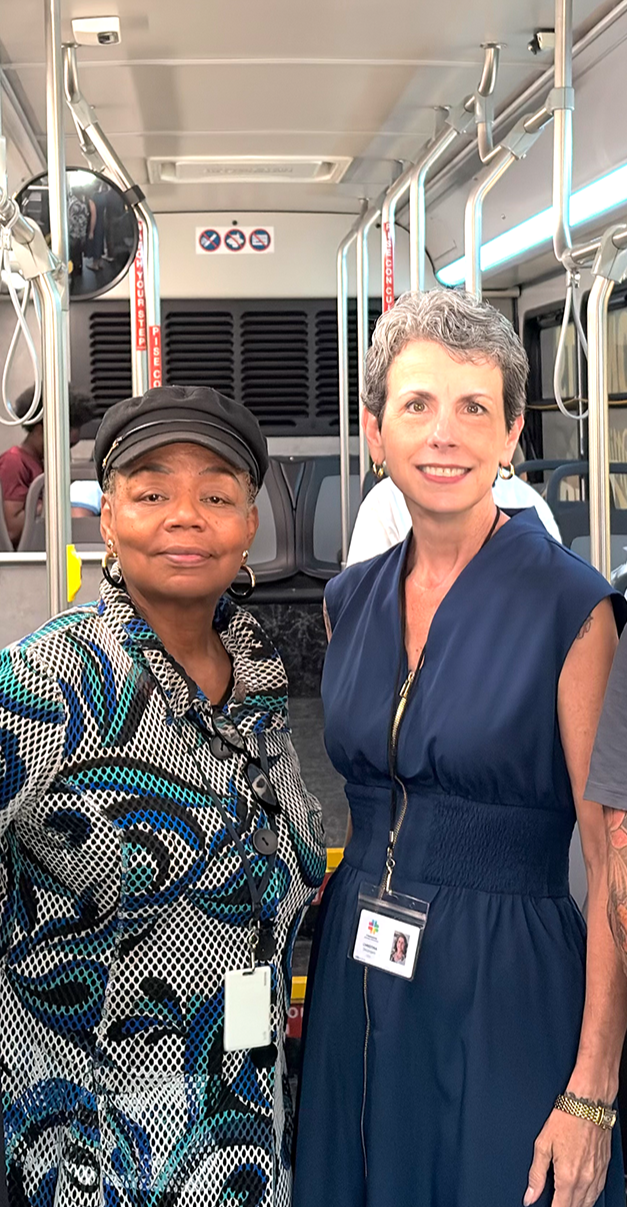
Free City Buses Will Connect Workers to Jobs, Make Lynchburg More Accessible, and Improve Our Health
He was walking from Florida Avenue to the Social Security office on Timberlake Road on a hot August afternoon because he didn’t have money for bus fare. In our Lynchburg, the cost of a bus ride should not stand between someone and a job, a doctor, an education, or the basic services they need.
I’m Christina Delzingaro, and I’m running for Lynchburg City Council because I believe city government exists to serve people and solve problems, and right now, it isn’t. We need city leaders who will think differently, bring people together, and get to work. For more than three decades, I’ve done exactly that. When our city faced a healthcare access crisis, I brought together community members to create Community Access Network – a completely new approach to healthcare access that now serves thousands of people each year. I got to work. I listened. I learned from those who knew more. And then I delivered. Now it’s time to bring that approach to City Council.
I think Lynchburg should make GLTC buses fare-free – not because transportation is free to provide, but because reliable transportation is essential infrastructure. No one should miss a job, a doctor’s appointment, or an opportunity because they couldn’t get there. I believe the benefits of free buses could be literally lifesaving.
Free buses can improve health – and help lower health costs.
Transportation barriers cause people to miss appointments, delay routine care, and sometimes wait until a health problem becomes an emergency.
Better access to primary care, pharmacies, behavioral health services, and other routine care can mean fewer missed appointments and earlier treatment.
When someone can take the bus to a doctor instead of putting off care until they need an emergency department or ambulance, that is better for the patient and far less expensive for the healthcare system and our community.
Free buses can strengthen our workforce.
68% of GLTC’s fixed-route and Flex customers are going to work. For many riders, the bus is workforce infrastructure.
Removing fares can make it easier for people to get to work consistently, take a better job farther from home, or work shifts when arranging a ride is difficult.
Employers benefit when workers have a reliable way to get to the job – and Lynchburg benefits when more people can participate fully in our economy.
Free buses can improve health – and help lower health costs.
Transportation barriers cause people to miss appointments, delay routine care, and sometimes wait until a health problem becomes an emergency.
Better access to primary care, pharmacies, behavioral health services, and other routine care can mean fewer missed appointments, earlier treatment and better health outcomes.
When someone can take the bus to a doctor instead of putting off care until they need an emergency department or ambulance, that is better for the patient and potentially far less expensive for the healthcare system and community.
Free buses can make Lynchburg more accessible.
Not everyone drives. Older adults, people with disabilities, teenagers, people who cannot afford a car, and families sharing one vehicle all need dependable ways to move around our city.
Fare-free transit can connect people to school, childcare, grocery stores, government services, community activities, and each other.
One in four public transit systems in Virginia operate fare-free. They have found that eliminating fares attracted new riders and encouraged existing riders to ride more often.
We should do the math before we make the decision.
GLTC currently projects about $600,000 a year in fare revenue. That is real money, but it is not necessarily the true net cost of going fare-free.
We should calculate fare-collection savings, and we should pursue Virginia zero-fare grants, employer and healthcare partnerships, college partnerships, and any additional funding tied to increased ridership.
Then we should weigh the net cost against the workforce, accessibility, economic, and health benefits to Lynchburg.
If you think fare-free buses are an idea whose time has come, I’d be proud to have your vote. As a member of Lynchburg City Council, I’ll put the numbers on the table and get to work.